

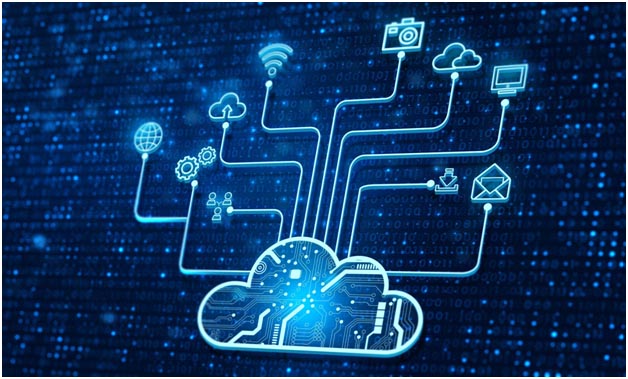
You can feel that a digital transaction has virtually taken no time at all. A consumer logs on to a site, selects a service, makes a payment and gets a response back within seconds. There's also a complicated system of cloud infrastructure, identity systems, payment gateways, databases and security tools operating in real time behind that simple journey.
The modern transaction is not typically managed by a single server or even a single company. Rather, it operates on a distributed technology stack that identifies users, processes requests, detects fraud, logs activity, and securely delivers funds. This process has been sped up and made more scalable by cloud computing, but it has also introduced a more complex technology behind the simple act of logging in.
Authentication Is the First Cloud Transaction
It frequently starts even before any funds are transferred. The platform should verify a user's username and password entry against an identity system. This is often accomplished by using cloud-based identity and access management (IAM) services, which are becoming increasingly popular for large digital businesses.
They can verify passwords, control multi-factor authentication, identify trusted devices and alert to suspicious logon activity. A login from a familiar phone might go through in no time at all, but a login from an unfamiliar country or device might cause further authentication.
The same infrastructure is also used to manage permissions. Once authenticated, the system needs to know what the user is allowed to access. It might be account balances, payment methods, stored data, or certain services. This layer is important because all subsequent steps in the transaction rely on the correct identification of the individual behind the transaction.
APIs Connect the User to Multiple Services
After logging in, the user can think that they are using a single website or application. On the technical level, they could be interacting with dozens of different cloud services.
These systems communicate with each other via application programming interfaces (APIs). One API might retrieve account data. Another could request a payment. Another may check for fraud screening, and a third may document the transaction for compliance.
For instance, this structure is especially significant for platforms that support many concurrent users. Rather than creating a single large application, companies can break functions into smaller applications that reside in the cloud.
What emerges is a transaction flow in which various infrastructure components perform distinct tasks and, on the front end, appear as a single transaction.
Payments Travel Through a Complex Network
Another set of systems is implemented at the payment stage. Typically, when a user makes a deposit or buys a product online, the website sends the payment data to a payment processor or a gateway. That provider then speaks with banks, card networks, or other financial infrastructure to determine whether the transaction should be authorized.
Some of the most sensitive financial information may never be addressed directly by the platform itself. Tokenization can be used to replace card numbers with temporary digital identifiers, minimizing the amount of valuable payment data stored within the company's systems.
Cloud services also assist businesses to deal with unexpected rises or falls in demand. A platform can automatically add computing resources when activity is high and scale them down when it's not.
Moreover, this is significant in the digital entertainment, e-commerce, and financial services sectors. Payment systems on platforms like those users might see when looking for parhaat nettikasinot need to accommodate deposits, account adjustments, and withdrawals while maintaining a relatively straightforward user experience.
Fraud Detection Happens in Milliseconds
A transaction can also go through a risk engine before it is approved. Today's fraud detection solutions look at more than just the payment amount. They can review device information, account history, location, transaction frequency, and behavioral patterns.
Moreover, machine learning models can compare a new transaction against a massive amount of past transactions to determine whether it appears 'out of the ordinary.'
If the transaction comes from a recognized device and is within normal behavior, it might be permitted to go through. Several of these extraordinary activities, occurring in sequence within a couple of seconds, may trigger further checks or temporarily freeze the transaction.
The challenge is to do so without causing any additional friction. Security systems need to differentiate between true suspicious activity and regular business activities and permit the latter to proceed without delay.
Databases Keep the Entire Journey in Sync
All actions must be documented as well. Multiple databases may need to be updated nearly concurrently when money is deposited into or withdrawn from an account. The user's balance is adjusted, a record of the transaction is generated, and the payment provider provides a status, and potentially new information is available in internal reporting systems.
These updates can be processed using distributed cloud databases, enabling the handling of massive volumes of such updates. When you're talking about money, consistency is especially key. When one system is successful and another is not, users may view inaccurate balances or duplicate payments.
Modern platforms, therefore, employ transaction management, along with replication and backup systems, to ensure financial records remain in sync, even if a server goes down.
Payouts Add Another Layer of Verification
The process of withdrawing can be more complex than deposits. A platform might require account holder confirmation, review the account's transaction history, and verify that the payment method is suitable for receiving funds before sending the money out.
Compliance systems may also be engaged. Depending on the industry and jurisdiction, platforms may need to conduct identity verification and/or anti-money laundering checks, or other regulatory measures, prior to completing a payout.
After the withdrawal request is approved, it returns to the payment infrastructure. There can be different technical paths for bank transfers, payment wallets and card-based payouts. The user may still think that he is pushing a single button.
Reliability Depends on Redundancy
You can't just have a digital transaction platform go down if a single machine fails. Redundancy is, in essence, the main principle behind cloud infrastructure. Applications and databases can span multiple servers, data centers or geographic regions. If one component fails, traffic can be handled by another component.
Load balancers manage traffic distribution among infrastructure, and monitoring systems monitor performance continuously. One reason major digital services can process a massive number of transactions without users being aware of the physical locations of the computers involved is this architecture.
The Simple Transaction Is Becoming More Complex
It's ironic, but the easier it is to use digital payments, the more complex the underlying infrastructure becomes. The login, payment and payout process can include multiple layers of cloud security, identity providers, APIs, databases, payment processors, fraud models and compliance systems.
Most of this technology will not be visible to users and that's the idea. Good infrastructure is hidden. Making payments faster will therefore not just constitute the future of digital transactions. It will rely on a growing, complex mesh of cloud services, but in a non-complex way.