

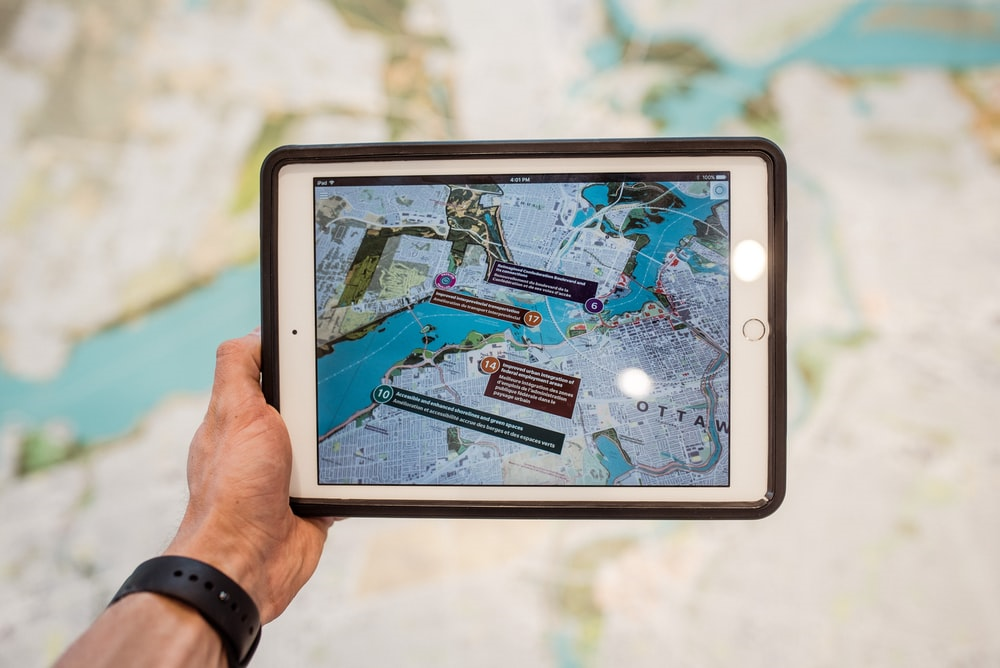
GIS data, information tied to a precise place, turns raw facts into location intelligence. By aligning attributes with coordinates, organizations can spot patterns, quantify risk, and act with confidence. This article defines what GIS data is, outlines core components and data models, explains business benefits, surveys real-world applications, highlights quality pitfalls, and looks ahead to emerging trends shaping the next decade.
Introduction: Why Location Changes Decisions
Most teams already track “what” and “when.” GIS adds the missing where. Once a dataset includes location, an address, parcel ID, latitude/longitude, or polygon, maps and spatial analysis reveal relationships that rows and columns can’t. Early in any location-heavy initiative, agencies and enterprises often engage GIS services to convert scattered records into usable layers, configure web maps, and set governance. For example, a public works group in Houston, Texas, might merge storm drain locations, elevation models, and flood claims to prioritize drainage upgrades with clear evidence.
GIS technology excels in project visualization, particularly through its advanced 3D modeling and virtual reality (VR) capabilities. These tools enable project teams to visualize the final outcome of an infrastructure project before construction begins, providing a detailed perspective on how new developments will integrate with existing structures and the surrounding environment.
Definition: What Is GIS Data?
What is GIS data? In plain terms, it is any dataset that includes a geographic reference, allowing it to be placed on a map and analyzed spatially. Three elements define it:
- Location: a coordinate pair, address, or other spatial reference.
- Geometry: a point, line, polygon, raster cell, or 3D mesh defining shape.
- Attributes: descriptive fields (e.g., material, speed limit, inspection date) that give the features business meaning.
When these elements are aligned, organizations can ask spatial questions: Where are service gaps? How far is a population from clinics? Which assets sit in high-risk zones?
Data Models: Vector, Raster, and 3D
A solid grasp of data models helps teams choose the right tool for the job.
- Vector data
- Points: valves, manholes, schools, streetlights.
- Lines: roads, pipelines, trails, powerlines.
- Polygons: parcels, zoning, habitats, floodplains.
- Best for: discrete features, boundaries, networks, and editing.
- Raster data
- Grids of equal-sized cells (pixels), such as aerial imagery, land cover, elevation (DEM), or surface temperature.
- Best for: continuous phenomena, surface modeling, suitability scoring, and heat maps.
- 3D and time-enabled data
- Building interiors, digital terrain/ surface models, Lidar point clouds, BIM integrations, trajectories that change through time (vehicle GPS, storm tracks).
- Best for: vertical analysis, visibility, shadow studies, simulation, and change detection.
Core Components: From Layers to Metadata
A dependable GIS rests on a few building blocks:
- Coordinate systems & projections: ensure layers align. Standardize them across the project.
- Layers: each theme (roads, parcels, wetlands) exists as a separate, stackable layer.
- Basemaps: provide context, imagery, terrain, or streets.
- Attribute schemas: consistent field names and domains (dropdowns) maintain data integrity.
- Metadata: who created the dataset, how it was produced, accuracy, and refresh frequency.
- Access controls: protect sensitive sites and personal information with roles and least-privilege permissions.
Benefits: Why GIS Data Improves Outcomes
1) Evidence-based decisions
Maps make complex analysis easy to scan, accelerating consensus among engineers, planners, finance, and community stakeholders.
2) Targeted capital spending
Spatial overlays (risk, asset condition, service demand) reveal where dollars deliver the highest return.
3) Risk visibility and mitigation
By intersecting hazards with assets and populations, teams quantify exposure, plan redundancies, and stage resources.
4) Operational speed
Field crews navigate to exact coordinates with the right materials; dashboards update in near real time as work orders close.
5) Accountability and transparency
Versioned layers and time-stamped edits create an auditable record that supports reporting, compliance, and public trust.
6) Cross-functional collaboration
Because everyone can read a map, GIS data becomes a shared language that reduces miscommunication and rework.
High-Value Applications Across Sectors
Public Works & Utilities
- Water loss detection and leak triangulation.
- Valve isolation modeling for shutdown planning.
- Vegetation encroachment near transmission lines.
Transportation
- Pavement condition mapping and prioritization.
- Collision hot-spot analysis supporting Vision Zero.
- Transit route design and drive-time catchments.
Planning & Economic Development
- Site selection balancing zoning, utilities, flood risk, and market demand.
- quity analysis to locate service deserts.
- Tax increment planning supported by parcel-level trends.
Environmental Management
- Wetland delineation and habitat corridors.
- Air and water quality mapping with sensor feeds.
- Restoration targeting using soils, slope, and land cover.
Emergency Management & Public Safety
- Evacuation zones and shelter siting.
- Real-time incident mapping, staging, and mutual aid.
- Post-event damage assessment from drone and satellite imagery.
Health & Human Services
- Access-to-care studies using transit time and clinic capacity.
- Social determinants of health mapping at block level.
- Outbreak tracking with time-enabled layers.
Private Sector (Retail, Real Estate, Logistics)
- Trade-area and competitor proximity analysis.
- Last-mile delivery optimization with constraints.
- Portfolio risk scoring (flood, wildfire, heat exposure).
Hallmarks of Effective GIS Analysis
- Explicit criteria: publish the rules (e.g., parcels >2 acres, within 1 mile of transit, outside 100-year floodplain).
- Comparable scenarios: show multiple options on identical basemaps to clarify trade-offs.
- Readable cartography: calm symbology, legible labels, legends, and scale bars.
- Actionable outputs: ranked shortlists, phased schedules, and cost ranges, not just pretty maps.
Data Quality: Pitfalls and How to Avoid Them
- Projection mismatches: standardize a project CRS and transform inputs on ingest.
- Stale layers: check timestamps; automate refreshes for fast-changing data (traffic, inspections).
- Geocoding errors: validate addresses; spot-check outliers on imagery.
- Attribute drift: Enforce domains and templates to keep values consistent.
- Over-styled maps: aesthetics must never hide the message; default to clarity.
- Unclear lineage: require metadata, source, accuracy, and processing steps, to support reproducibility.
Future Trends Shaping GIS Data
Real-Time and Streaming GIS
IoT sensors, AVL for fleets, weather radar, and SCADA systems stream into maps, enabling live situational awareness and dynamic routing.
AI-Assisted Mapping and Prediction
Machine learning accelerates land-cover classification, object detection in imagery (e.g., damaged roofs), anomaly spotting, and failure risk modeling for pipes or transformers. Human review remains essential, but analysts focus on framing questions and validating results.
Digital Twins and 3D Operations
Cities and asset owners are knitting together GIS, BIM, and sensor telemetry into digital twins that support “what-if” testing, signal timing changes, EV charger placement, or stormwater conveyance under varying rainfall scenarios.
Easier Field Capture
Modern mobile apps work offline, guide users with validation rules, embed photos, and sync automatically, raising accuracy while cutting paperwork.
Cloud-First Collaboration
Cloud GIS centralizes layers, permissions, and web apps so teams co-edit securely and publish instantly to internal and public audiences.
Privacy-by-Design
As more layers become public, governance includes aggregation thresholds, masking, and minimization to protect sensitive locations and personal data.
Climate and Resilience Analytics
Organizations model heat islands, flood pathways, wildfire risk, and carbon impacts, turning climate strategy from aspiration into measurable change backed by spatial evidence.
FAQ
Is GIS only for large agencies?
No. Small teams start with lightweight web tools and a handful of layers, then grow as needs expand.
Do I need a specialist?
A specialist speeds up setup and complex analytics. With clear schemas and good cartography, most stakeholders can explore maps confidently.
What makes GIS data “good”?
Accuracy, recency, consistent schemas, clear metadata, and an accountable owner. Miss one, and reliability drops.
How often should we update?
Match the rate of change: imagery and demographics less often; conditions and work orders more often. Automate whenever possible.
Key Takeaways
- What is GIS data? Data with a location reference that supports mapping and spatial analysis.
- Why it matters: It sharpens decisions, targets spending, reduces risk, and speeds operations.
- How to succeed: Use authoritative sources, strong schemas, metadata, version control, and clear cartography.
- What’s next: Real-time feeds, AI-assisted analytics, digital twins, and cloud collaboration will expand the reach and impact of location intelligence.
When organizations treat GIS data as a living asset, curated, documented, and refreshed, the map becomes more than a picture. It becomes a reliable guide for everyday operations and strategic investments.\