

When IT teams first hear about hyperconverged infrastructure, it sounds almost too good to be true. One platform that handles compute, storage, and networking? Simpler management, lower costs, faster deployments? Yes, please. But then reality kicks in, and suddenly you’re deep in planning meetings, vendor negotiations, and a growing list of unknowns.
The truth is, enterprise HCI implementation services aren’t a plug-and-play affair. Done right, they transform your data center. Done poorly, they create more problems than they solve. We’ve seen both outcomes, and the difference almost always comes down to how well you navigate the deployment phase.
So let’s talk about what actually trips organizations up, and why Sangfor HCI keeps standing out as the smarter path forward.
The Part Nobody Warns You About
HCI deployment challenges don’t usually announce themselves upfront. They sneak in during the middle of rollout, after the contracts are signed and the hardware is already racked. Here’s what tends to catch teams off guard:
- Skill gaps are probably the most common one. Your team knows the old environment inside out, but HCI is a different thing. The learning curve can slow things down considerably, especially when leadership expects things to “just work” from day one.
- Data migration is another silent killer. Moving workloads from legacy systems to a new HCI platform without disrupting live services is genuinely hard. One wrong move and you’re looking at unplanned downtime, which, in production environments, is never a small thing.
And then there’s scalability planning. A lot of enterprises underestimate future growth, then end up overhauling their setup within two or three years. That’s expensive and avoidable.
Why the Vendor You Choose Actually Matters
Not all HCI vendors approach these problems the same way. Some hand you the platform and leave the heavy lifting to your team, or to expensive third-party consulting firms. Others build their deployment support directly into the product. So, when you’re choosing an HCI vendor, here’s a question you must ask:
Does your HCI vendor support deployment, or just sell software?
Sangfor HCI falls firmly in the second camp of HCI vendors. The platform is designed around the idea that enterprise teams shouldn’t need six months of consulting just to get things running.
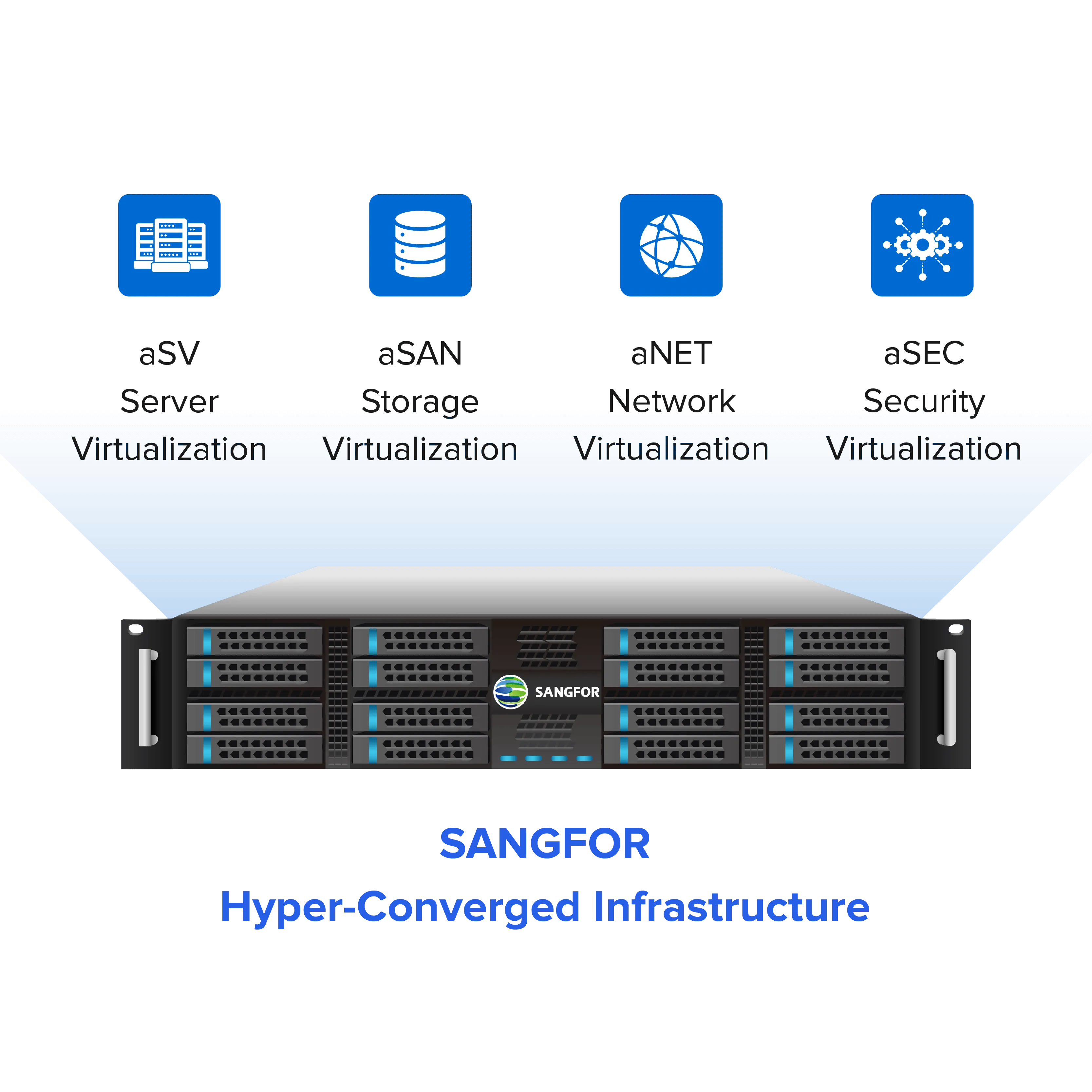
Out of the box, Sangfor HCI integrates compute, storage, and networking (aSV, aSAN, & a NET (News - Alert)) into a single, manageable stack, and it adds something most competitors don’t: built-in cybersecurity through aSEC.
That last point matters more than people realize. Security is usually a separate conversation in most HCI rollouts.
With Sangfor, it’s baked in from the start. That’s one less integration to worry about, one fewer vendor to manage, and a significantly smaller attack surface.
How Fast Can You Actually Get Up and Running?
This is where our approach gets interesting. Typical HCI deployments from some of the bigger players can stretch to three, even six months. There’s the configuration, the testing, the workload migration, the staff training … it adds up fast.
Sangfor HCI cuts that down dramatically. With pre-configured stacks and AI-driven orchestration, initial deployment can happen in less than an hour. Full production rollouts still take time; that’s just the reality of enterprise environments, but the reduction from months to weeks is a genuine competitive advantage. Your ROI clock starts ticking much sooner.
This is more than a marketing promise in the brochure. In fact, we have already deployed HCI at rapid speed within complex environments. Here’s one such example:
What happened: A regional multi-site medical center in Malaysia upgraded its legacy infrastructure to Sangfor HCI to support a new Hospital Information System (HIS). The infrastructure was deployed and made operational within a short timeframe, significantly faster than a traditional three-tier rollout, with immediate performance and management improvements.
For businesses operating in fast-growing markets, that speed isn’t a luxury. It’s a necessity. In addition, here’s another question to consider:
Is security built in, or bolted on later on Your HCI Vendor?
Sangfor HCI doesn’t make security a bolt-on feature. Instead, they integrate security into the HCI platform from the virtualization layer. We have our aSEC make security part of the virtualization layer from the ground up. It’s safe to say that fast deployment is our approach, but it doesn’t come at the cost of compromising security.
How long does it take to deploy Sangfor HCI?
Sangfor HCI can be initially deployed in less than an hour using pre-configured software stacks and AI-driven orchestration. While full enterprise rollouts may take several days or weeks, depending on workload migration and testing requirements.
However, Sangfor significantly shortens implementation timelines compared to traditional HCI deployments that can take months. This faster deployment helps enterprises begin realizing ROI much sooner.
Common Pitfalls, and How to Sidestep Them
Even with the best platform, mistakes happen. Here are the ones I see most often in enterprise HCI rollouts:
- Underestimating networking requirements: HCI changes your traffic patterns significantly. If you haven’t re-evaluated your network architecture before deployment, you’ll feel it post-go-live.
- Rushing workload planning: Not every application is a good candidate for immediate migration. Prioritize based on criticality and compatibility.
- Skipping the audit phase: A proper infrastructure audit before you begin can prevent most of the surprises that derail timelines later.
- Ignoring security until post-deployment: With us, this one practically solves itself, but with other vendors, it’s a costly afterthought.
Good consulting helps you catch these before they become expensive. The firms that specialize in enterprise HCI implementation services earn their keep precisely by knowing where the landmines are buried.
What We Actually Bring to the Table
Beyond the speed and the security, a few specific capabilities make our hyperconverged infrastructure (HCI) genuinely different from the alternatives:
- Seamless migration via the aCloud tool: Moving VMs without downtime is one of those things that sounds simple but rarely is. Our aCloud tool makes it far less painful than you’d expect.
- Flexible, pay-per-use licensing: After Broadcom’s (News - Alert) acquisition of VMware introduced punishing 72-core minimum requirements, a lot of enterprises found themselves effectively trapped or overpaying. Our licensing model is built around what you actually use, which makes it a perfect choice to bypass VMware licensing model for modern IT firms.
- Minimized-downtime upgrades: Upgrading your HCI environment without taking anything offline is a big deal in production. We handle this natively.
When you add up the TCO reduction, up to 70% compared to traditional setups, and stack it against what legacy infrastructure costs to maintain, the business case becomes pretty straightforward.
What’s more, we are represented by real-world users and on highly reliable peer review insight platforms like Gartner and G2 (News - Alert), gathering a 4.8 and a 4.7-star rating, respectively, out of 5. So, if reliability was a question, that’s also out of the way.
Sangfor vs. Other HCI Vendors
Most enterprise HCI implementation services provide the same benefits. But the difference between them becomes clearer when you analyze them based on deployment time, TCO, or licensing flexibility.
With our server virtualization software, you can reduce your cost of ownership by 70%. Also, with reduced hardware requirements and streamlined management, the scalability of their hyper-converged infrastructure helps mitigate evolving business needs.
Here’s a quick side-by-side look at how we compare on the metrics that matter most during an enterprise HCI rollout:
|
Feature |
Sangfor HCI |
Other Vendors (Nutanix, VMware) |
|
Deployment Time |
Under 30 minutes |
1–3 months |
|
TCO Reduction |
Up to 70% |
30–50% |
|
Built-in Security |
Security added through aSEC |
Usually requires add-ons |
|
Licensing Flexibility |
Pay-per-use, flexible scaling |
72-core minimums (Broadcom VMware) |
Does Sangfor HCI include built-in security during implementation?
Yes. Sangfor HCI includes integrated security through aSEC, which embeds cybersecurity capabilities directly into the virtualization platform. This means enterprises can deploy infrastructure and security together rather than adding firewalls, endpoint protection, and threat detection separately after implementation. As a result, organizations reduce deployment risk, lower operational overhead, and improve security from day one.
Choose Frictionless Enterprise HCI Implementation Services
Enterprise HCI implementation is one of those things where the quality of your preparation and the platform you choose determines almost everything. The technology itself is sound. It’s the execution that separates successful rollouts from expensive cautionary tales.
Sangfor HCI, as virtualization software, doesn’t just provide the infrastructure. It gives you the tools, the speed, the built-in security, and the flexibility to grow without penalty.
If you’re planning an HCI rollout and want to avoid the common traps, start with a proper audit, get the right consulting support, and seriously consider what separates the leading HCI vendors from the pack.